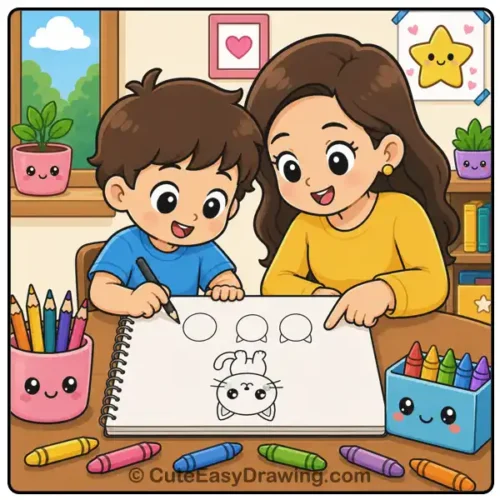
Drawing gives children a playful way to explore their imagination, strengthen observation skills, and turn simple ideas into creative pictures. For parents wondering how to teach kids to draw, the best approach is to begin with basic shapes, easy instructions, and plenty of encouragement. Simple drawing activities can help young beginners build confidence while learning at a comfortable pace. With regular practice and a little creative freedom, drawing can become an enjoyable part of a child’s everyday learning.
Why Art Matters in a Child’s Early Years
A blank sheet of paper can become a wonderful space for children to explore ideas, emotions, and imagination. Through drawing for children, young minds can build confidence, improve focus, and develop hand-eye coordination while simply having fun. Creative activities also give kids the freedom to express feelings that may be difficult to explain with words. Starting with easy drawing lessons keeps the experience simple, enjoyable, and encouraging as their skills grow.
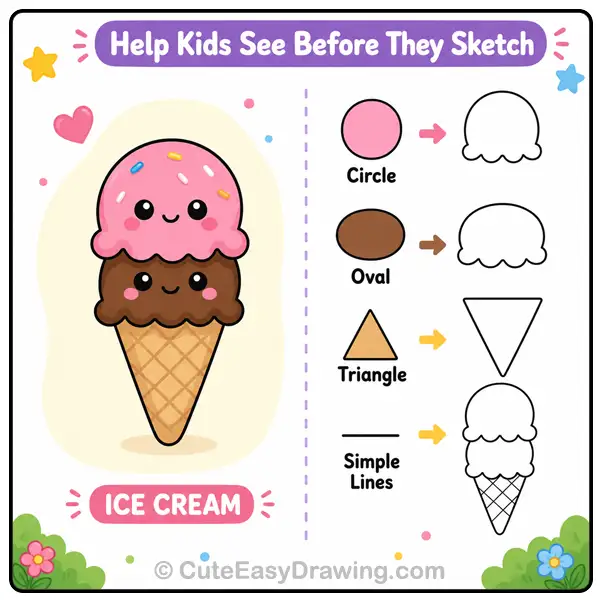
Help Kids See Before They Sketch
Good art often begins with a closer look. Encourage children to notice simple details such as shapes, lines, curves, sizes, and textures before putting pencil to paper. This habit makes drawing for beginners feel easier because kids can break an object into smaller, familiar parts. As you teach kids to draw, they also become more patient and attentive to the little details around them.
How Kids’ Drawing Skills Grow with Age
Children’s artwork changes as their imagination, observation, and motor skills develop. Understanding these stages can help parents offer the right encouragement as kids learn to draw and explore their creativity.
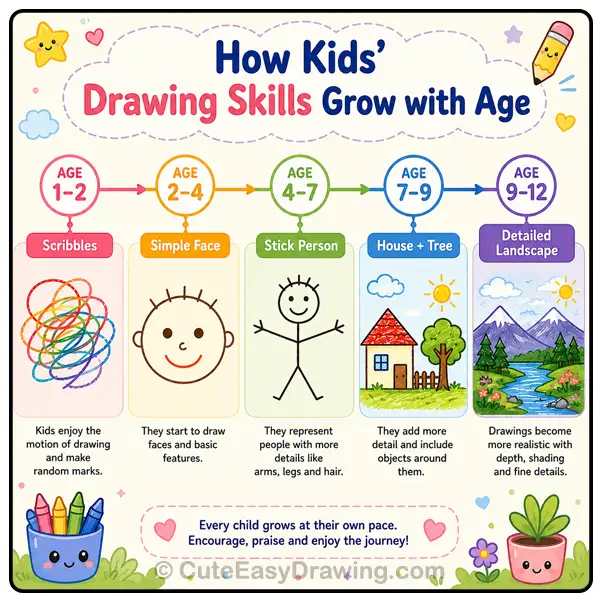
- Scribbling Stage: Around ages 1–2, dots, loops, and playful lines are all part of the fun. Children begin discovering how their hand movements leave marks on paper.
- Pre-Schematic Stage: Between ages 2–4, simple shapes and lines may start representing familiar people or objects. The picture might not be obvious to adults, but it often has meaning to the child.
- Schematic Stage: From about ages 4–7, pictures usually become more recognizable and organized. Kids may add body parts, familiar shapes, and colors with greater purpose.
- Transitional Stage: Around ages 7–9, children often add more detail while paying closer attention to size, proportion, and the appearance of everyday objects.
- Realism Stage: Between ages 9–12, many children become interested in creating more lifelike pictures using details, shading, depth, and perspective. Encouragement can help them improve while still enjoying the creative process.
Drawing – Different Type
Not every child enjoys creating pictures in the same way. Exploring different drawing styles for kids can help them discover whether they prefer playful characters, real-world scenes, free expression, or neat designs.
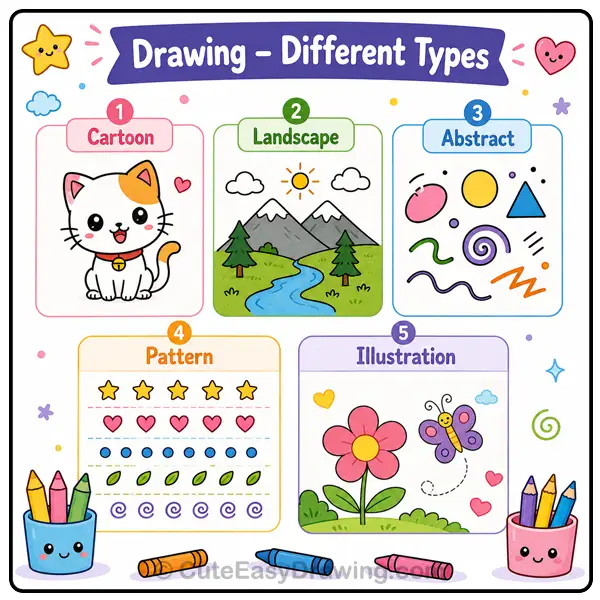
- Cartoons – Silly faces, funny characters, and exaggerated features make cartoons playful and forgiving. Kids can focus on imagination instead of perfect lines.
- Illustrations – Turning familiar people, objects, or ideas into pictures helps children connect everyday experiences with creativity.
- Landscapes – Trees, houses, clouds, gardens, and outdoor scenes offer plenty to explore. Kids can keep their pictures simple or add details as their confidence grows.
- Abstract Art – Colors, lines, and shapes can take the lead without needing to resemble anything real. It gives children the freedom to create whatever feels right.
- Patterns – Repeating dots, waves, shapes, or lines can turn a simple doodle into an eye-catching design. It is an easy way to experiment with order and creativity.
👉 Let your child try different styles without pushing them toward a particular one. The style they enjoy most may be the one that keeps them reaching for their pencils.
How to Teach Kids to Draw with Simple Techniques
Children build drawing skills at different speeds, so start with what feels comfortable for your child. Younger kids may still be learning to guide a crayon across the page, while older children may be ready for details, depth, and shadows. These four techniques can make practice easier to introduce at home.
1. Start with Line Drawing
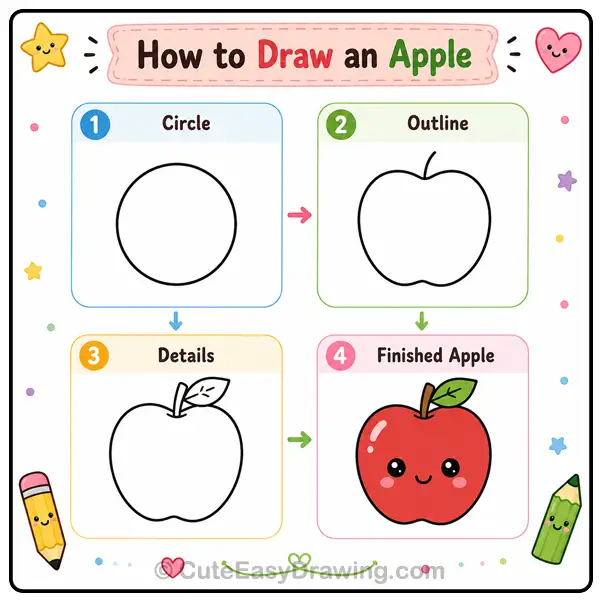
Lines and outlines give kids a simple foundation for building a picture.
Step 1: Pick an easy subject to sketch.
Step 2: Look at its overall shape and position.
Step 3: Create the outer outline with simple lines.
Step 4: Add smaller features inside the shape.
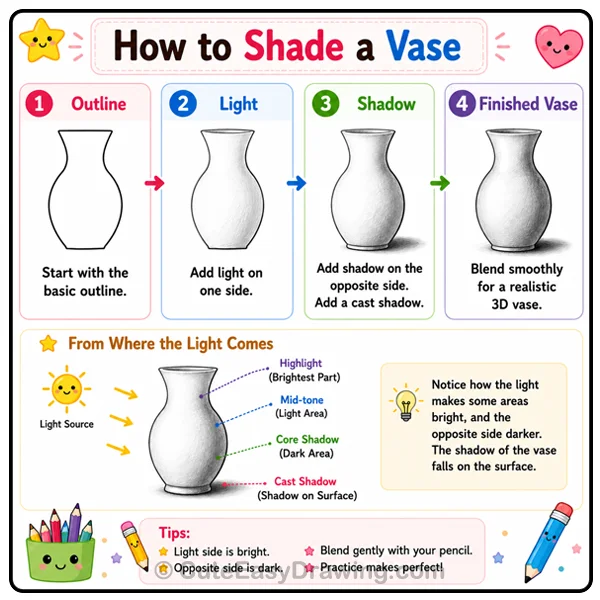
2. Experiment with Shading
Once the outline is ready, light and dark areas can make the picture feel more complete.
Step 1: Begin with a finished line drawing.
Step 2: Notice where light falls and where shadows appear.
Step 3: Use gentle pressure for lighter areas and firmer strokes for darker ones.
Step 4: Blend the tones gradually for a softer finish.
3. Create a 3D Drawing with Depth and Shadow
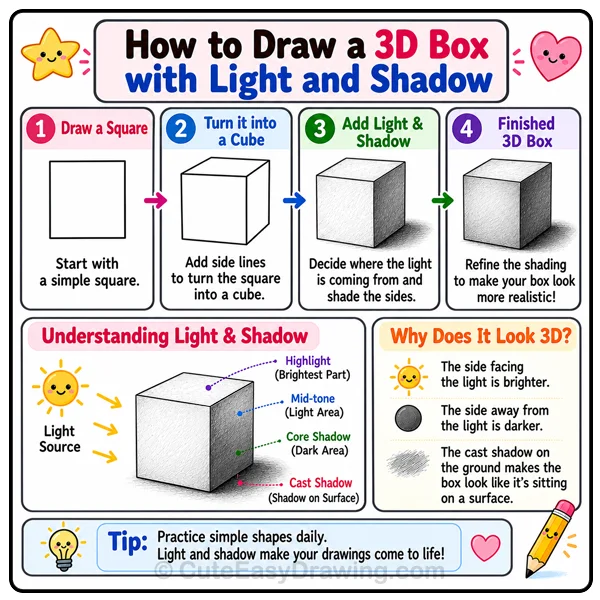
Once children understand simple shading, they can use the same ideas to turn flat shapes into realistic 3D objects. Adding depth lines first and then shading the object helps it look more solid and lifelike.
Step 1: Start with a simple square or rectangle.
Step 2: Add side lines to turn it into a cube or box.
Step 3: Decide where the light is coming from and lightly shade the sides facing away from the light.
Step 4: Add a cast shadow beneath the object to make it appear to sit on a surface.
There is no need to master every technique at once. Keep practice relaxed, let children experiment, and allow their skills to grow naturally with each picture they create.
How Drawing Helps Young Minds Grow
Art time can support much more than creativity. As one of many creative activities for kids, sketching gives children opportunities to think, explore, practice coordination, and feel proud of their ideas.
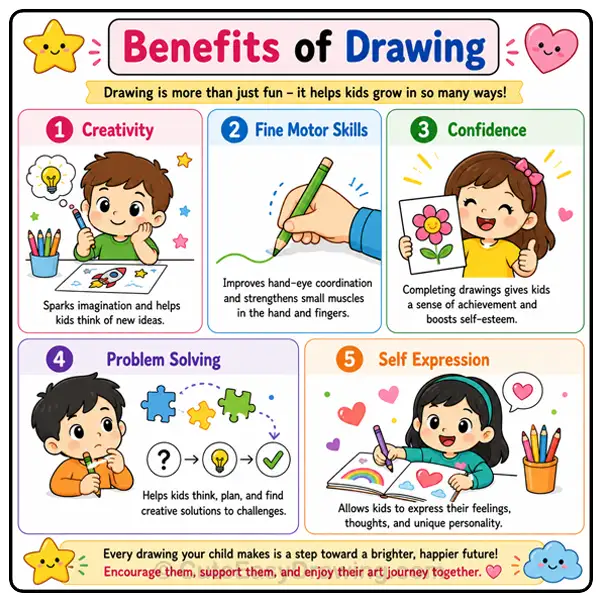
- Builds Thinking Skills – Planning what to draw encourages kids to make choices, notice details, and find creative solutions along the way.
- Strengthens Little Hands – Holding pencils and crayons helps develop fine motor control and hand-eye coordination—skills children use in many everyday tasks.
- Encourages Confidence – Finishing a picture can bring a wonderful sense of achievement. Supportive feedback helps children feel good about their effort and encourages them to keep trying.
- Sparks Imagination – A few simple lines can become a castle, an animal, or an entirely new world. Art gives children space to experiment with ideas and create without fixed rules.
Let Creativity Lead the Way
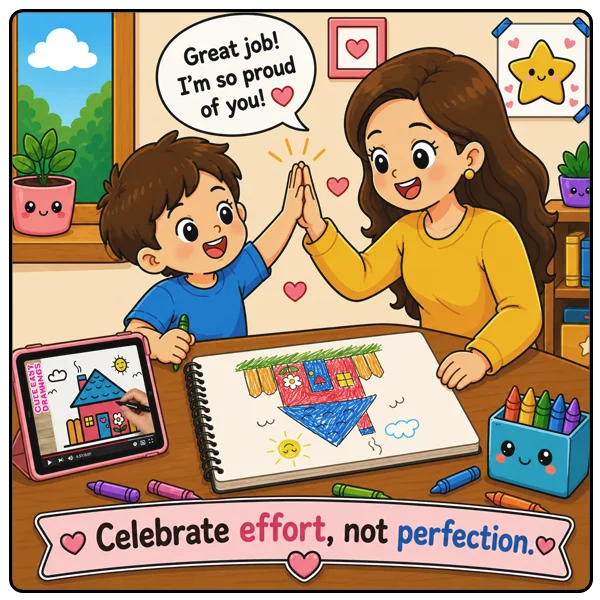
Every sketch gives a child another chance to imagine, experiment, and grow. When discovering how to teach kids to draw, offer simple tools, introduce new ideas, and encourage them to explore art in their own way. Celebrate the effort behind each creation rather than how polished it looks. Most importantly, keep drawing enjoyable—because creativity grows best when children feel free to make something truly their own.
Table of Contents
Cute Easy Drawings – Learn Step-by-step

Free Coloring Pages for Your Inbox!
We’ll never spam you — just fun stuff for you and your little artist. Pinky promise.😊